← The Global Intelligence Brief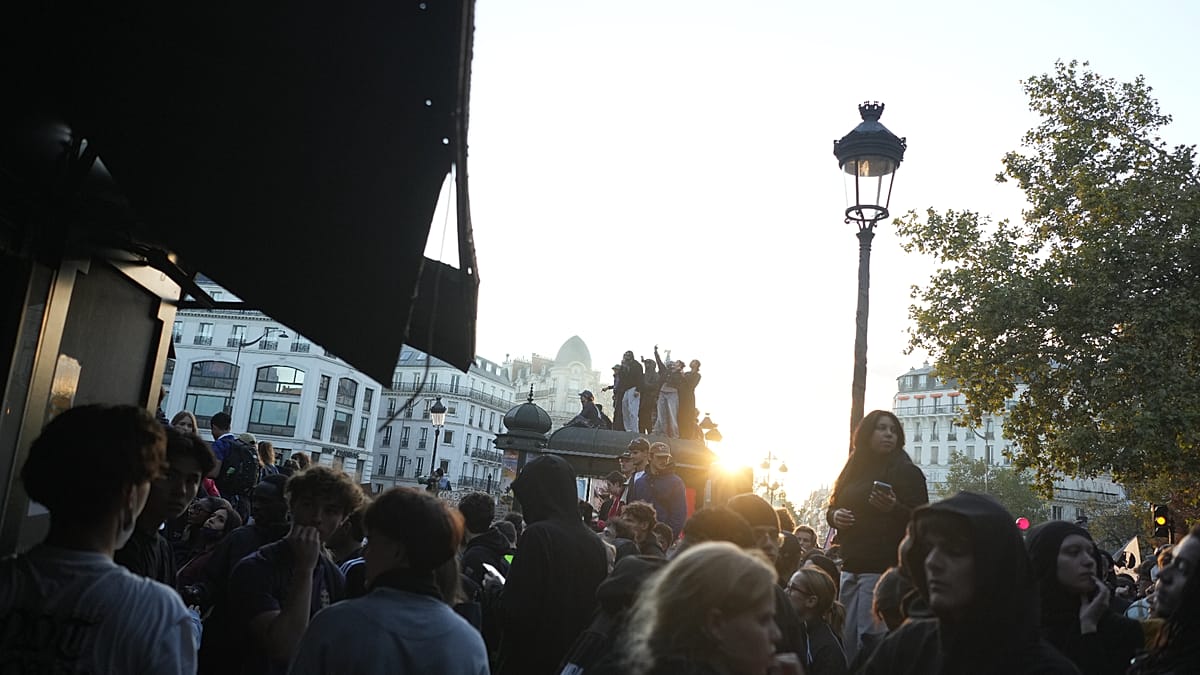


 4 sources
Morning Edition · Monday, October 19, 2026Published at 1:11 AM EDT · New York
France counts 2,397 arrests and 997 injured officers after cost-of-living protests turn violent
Macron ordered a review and blamed ultra-left groups, Trump and Vance blamed immigration, and the Kremlin rejected suggestions of Russian involvement, with euro-zone inflation at 3.8%.
President Emmanuel Macron condemned what he called "shocking" violence and ordered a review after nationwide protests on Saturday. Police made 2,397 arrests, and 997 police officers and gendarmes were injured, seven of them badly. One protester died of cardiac arrest in Paris. In Limoges, rioters set fire to the 140-year-old town hall. The arrest total approaches the nearly 2,000 recorded on a single day of the yellow-vest protests in December 2018. The protests began over the cost of living and conditions in schools. Macron promised an "uncompromising" response to "agitators from ultra-left fringe groups, joined by numerous delinquents," but did not declare a state of emergency.
The economic pressure is measurable. Euronews traces the protests across Europe to food prices, unaffordable housing and stagnant purchasing power. Euro-zone inflation rose to 3.8% in September, with energy prices up 18.8%. France's rate was 3.4%. The European Central Bank (ECB) raised rates for the second time this year on September 10.
Each outside power gave its own explanation. A Russian independent outlet quoted President Donald Trump urging France to close its border and saying that "immigration of people from a completely different world, people with hatred in their hearts, destroyed this once great country". Vice President JD Vance also blamed immigration. Kremlin spokesman Dmitry Peskov called allegations of Russian involvement in European riots absurd.
The evidence available supports a simpler account than any of these. Energy-driven inflation has outpaced wages, the ECB is raising rates into slowing growth, and France has little fiscal room to compensate households.
Part of a tracked trend
Inflation Turns Into Unrest in Europe
Energy-led inflation that outpaces wages keeps producing street unrest in European states with little fiscal room, so governments keep buying calm with borrowed money and the political risk premium on weaker euro-zone sovereigns keeps rising.
Veracity: Corroborated
84/100- If true, who benefits
The French government's blame on the "ultra-left" moves attention from economic policy to organized agitators. President Trump and Vice President JD Vance use the unrest to support their argument on immigration. The Kremlin's denial lets it call any suspicion of interference slander. Holders of French government bonds would pay for any spending concessions.
- The nuance
The 2,397 arrests and 997 injured officers are Interior Ministry figures. The "ultra-left" attribution comes from Interior Minister Laurent Nuñez. Trump's immigration explanation cites no data on who was arrested, and no public evidence yet confirms or rules out foreign involvement. Each actor's explanation of motive remains a claim, not a finding.
An open-source-intelligence read of how likely this story is true with its real nuance, not a judgment of any outlet. It assesses the claim, weighing independent and adversarial reporting. How we label confidence.
Synthesized from: The Nation Thailand · Euronews · TASS · Polylog editors
Townsquare
Start a discussion in Townsquare.
More from this edition
- Trump waives Graham Act sanctions on Russian energy, and Brent falls toward $108
- China's economy grew 4.5% in the third quarter as exports surged and retail sales barely rose
- Gold trades near $4,180 and silver near $58 after Warsh lowers expectations of an October Fed hike
- Putin proposes a summit with Trump and Xi in Shenzhen to negotiate an end to the Ukraine war
- Iran says its seven-day plan to reopen the Strait of Hormuz is still on the table
- Takaichi declines to rule out new government bonds to pay for Japan's food tax cut
- Ukraine hits a St. Petersburg oil terminal in a raid Russia says involved more than 1,000 drones
Comments
0No comments yet.