← The Global Intelligence Brief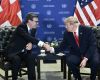


 3 sources
Morning Edition · Sunday, October 25, 2026Published at 1:18 AM EDT · New York
Burnham raises Argentina's campaign against the Sea Lion oil project with Trump
Halliburton has declined to work on the field north of the Falkland Islands and operator Navitas has replaced two contractors, as Buenos Aires prepares sanctions on suppliers and financiers.
In a phone call on Friday, British Prime Minister Andy Burnham told US President Donald Trump about the economic consequences that Argentina's "coercive measures" have for the United Kingdom and the United States, MercoPress reported. The call focused on the Sea Lion oil project north of the Falkland Islands. Britain administers the islands, Argentina calls them the Malvinas and claims sovereignty over them, and the Buenos Aires Times reported the call under that name.
The UK government approved Sea Lion on October 13. Reported resource estimates range from about 900 million barrels to 1.7 billion barrels. MercoPress says operator Navitas, which holds 65% of the project, has already had to replace two contractors, and US oilfield services company Halliburton has ruled out working on it. In Argentina, a National Sovereignty Defence bill still stalled in the Chamber of Deputies would extend sanctions to affiliates, shareholders, financiers and suppliers of companies operating in the islands. The International Tribunal for the Law of the Sea (ITLOS) in Hamburg will hold hearings on November 10 and 11 on Buenos Aires' request for provisional measures to halt production.
President Javier Milei has ruled out using force as the dispute escalates, according to bne IntelliNews. Trump has said in recent weeks that the long-standing US position of neutrality on sovereignty over the islands is under review. Buenos Aires wants Washington, its closest ally under Milei, to move toward its position. London wants Washington to treat Argentina's pressure on contractors as a cost to US companies.
Part of a tracked trend
Middle Powers Adopt Secondary Sanctions
Mid-sized states keep copying the great-power method of sanctioning third-party suppliers and financiers to contest resource projects, which raises legal and supply-chain risk for contractors operating in disputed areas.
Veracity: Corroborated
85/100- If true, who benefits
Navitas, Rockhopper and the islands' government gain if Washington treats Argentina's pressure as a cost to US companies. Buenos Aires gains if contractors with business in the Vaca Muerta shale region keep withdrawing.
- The nuance
Infobae and Ámbito confirm the call. The term "coercive measures" is London's description of the measures, and Buenos Aires calls them a lawful defense of sovereignty that it is pursuing at the International Tribunal for the Law of the Sea (ITLOS). Halliburton's withdrawal followed contacts with Argentina over sanctions risk, but Washington has not formally announced any change to its neutrality on sovereignty.
An open-source-intelligence read of how likely this story is true with its real nuance, not a judgment of any outlet. It assesses the claim, weighing independent and adversarial reporting. How we label confidence.
Synthesized from: MercoPress · Buenos Aires Times · bne IntelliNews
Townsquare
Start a discussion in Townsquare.
More from this edition
- Iran says mines disabled two supertankers near Hormuz as Brent settles at $116.72
- Gold falls below $4,000 as oil-driven inflation revives bets on a Federal Reserve rate increase
- France's 10-year borrowing cost tops 5.1% as cost-of-living protests return for a second weekend
- Brazil votes in a presidential runoff between Lula and Flávio Bolsonaro with polls showing a tie
- Chinese stocks have lost $3.5 trillion since May as corporate earnings miss forecasts
- Sanctioned Russian gas producer Novatek secretly financed an Alaska LNG project discussed in US-Russia talks, New York Times reports
- Japan's opposition demands Takaichi state the payments and funding in her consumption-tax cut bill
Comments
0No comments yet.