← The Global Intelligence Brief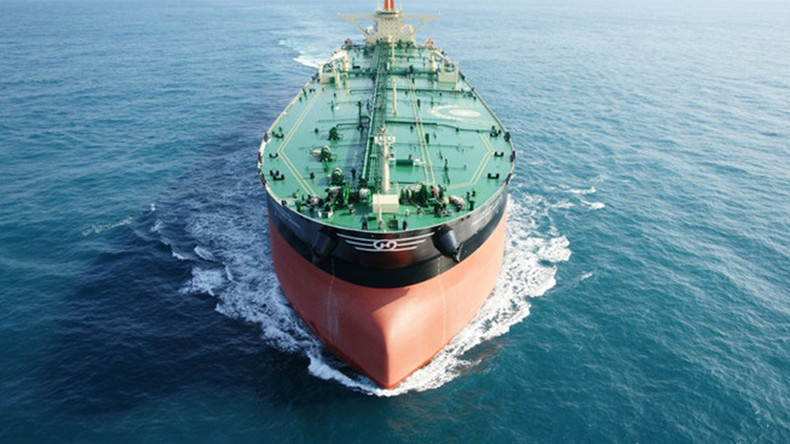


 4 sources
Morning Edition · Sunday, October 25, 2026Published at 1:18 AM EDT · New York
Iran says mines disabled two supertankers near Hormuz as Brent settles at $116.72
Asian buyers are paying more for the war even though more oil now moves through the strait than before it began: shipping US crude to Asia now costs four times what it did in mid-August, and fuel oil in Singapore costs more than crude.
The navy of Iran's Islamic Revolutionary Guard Corps (IRGC) said two supertankers it called "unauthorised" struck naval mines near the Strait of Hormuz on Friday. On Thursday, Britain reported that an unknown projectile had hit a ship crossing the strait. Iranian outlets, translated from Farsi, reported that explosions and fires disabled the engine rooms of both tankers, which were carrying more than 4.5 million barrels of crude between them.
Iran uses the word "unauthorised" for the southern channel near the coast of Oman. According to Euronews Persian, United States naval forces direct ships through that channel. The IRGC has reported similar mine strikes on October 12, October 17 and October 19. It has also warned it will act against ships that switch off their navigation and identification systems. The available reports do not say who laid the mines. Tehran presents each strike as the cost of using a route it does not approve.
Brent crude settled at $116.72 a barrel on Friday, up 3.1%, its highest in nearly six months. Traders pointed to Houthi attacks on Saudi energy sites and to Saudi Aramco's evacuation of its Dhahran headquarters. The same market report says oil volumes through Hormuz are now above pre-war levels, while Iran's own seaborne exports fell to zero in September and October under US sanctions and a naval blockade. Most of the current disruption is in the cost and routing of cargoes, not in the total volume moved.
Those costs are high. OilPrice reports that tanker freight has reached record levels and has removed most of the profit from shipping crude from the US Gulf Coast to Asia. According to RBN Energy, chartering a very large crude carrier (a tanker holding about 2 million barrels) for that route reached $80 million per voyage on October 9, or about $40 a barrel. The rate eased to just under $70 million by October 16. Freight on the route has risen more than 300% since mid-August, partly because ship-to-ship transfers used to avoid Hormuz keep vessels busy for longer.
The cost increase has also reached marine fuel. In Singapore, high-sulphur fuel oil now trades above the price of the crude used to make it, according to OilPrice. The causes are disrupted supply from the Middle East and Russia, steady bunker demand, and freight rates high enough to block cargoes from other regions. The energy shock has also reached monetary policy. Rising oil prices led traders to increase bets that the Federal Reserve will raise rates at its October 27–28 meeting.
Part of a tracked trend
Hormuz Chokepoint Repricing
Recurring Gulf conflict forces energy exporters and importers to build costly workarounds around the Strait of Hormuz, permanently raising the risk premium embedded in Gulf trade and infrastructure.
Veracity: Plausible
50/100- If true, who benefits
If Iran's account holds, Tehran gains leverage, because the mining raises the cost of using the United States-escorted southern channel. Tanker owners and insurers collect higher rates, and Washington gains a public case that Iran is mining an international waterway.
- The nuance
The only source for the strikes is the Islamic Revolutionary Guard Corps (IRGC). Iran International and Middle East Eye report the claim, and Al Jazeera noted no independent confirmation of the IRGC's similar report on October 17. No ship owner or flag state has named the vessels, nobody has said who laid the mines, and the separate incident Britain's maritime agency (UKMTO) reported was a projectile that hit a tanker near Limah, Oman, which kept sailing, not a mine strike.
An open-source-intelligence read of how likely this story is true with its real nuance, not a judgment of any outlet. It assesses the claim, weighing independent and adversarial reporting. How we label confidence.
Synthesized from: Africanews · OilPrice · OilPrice · Shahrara News (Farsi)
Townsquare
Start a discussion in Townsquare.
More from this edition
- Gold falls below $4,000 as oil-driven inflation revives bets on a Federal Reserve rate increase
- France's 10-year borrowing cost tops 5.1% as cost-of-living protests return for a second weekend
- Brazil votes in a presidential runoff between Lula and Flávio Bolsonaro with polls showing a tie
- Chinese stocks have lost $3.5 trillion since May as corporate earnings miss forecasts
- Sanctioned Russian gas producer Novatek secretly financed an Alaska LNG project discussed in US-Russia talks, New York Times reports
- Japan's opposition demands Takaichi state the payments and funding in her consumption-tax cut bill
- Bitcoin near $80,000 puts pressure on the preferred-stock funding behind Strategy's purchases
Comments
1Oct 25, 5:18 AM
With more oil transiting Hormuz than before the war, the cost to Asian buyers is arriving through freight rather than lost volume, so any easing should show up in tanker rates before Brent.