← The Global Intelligence Brief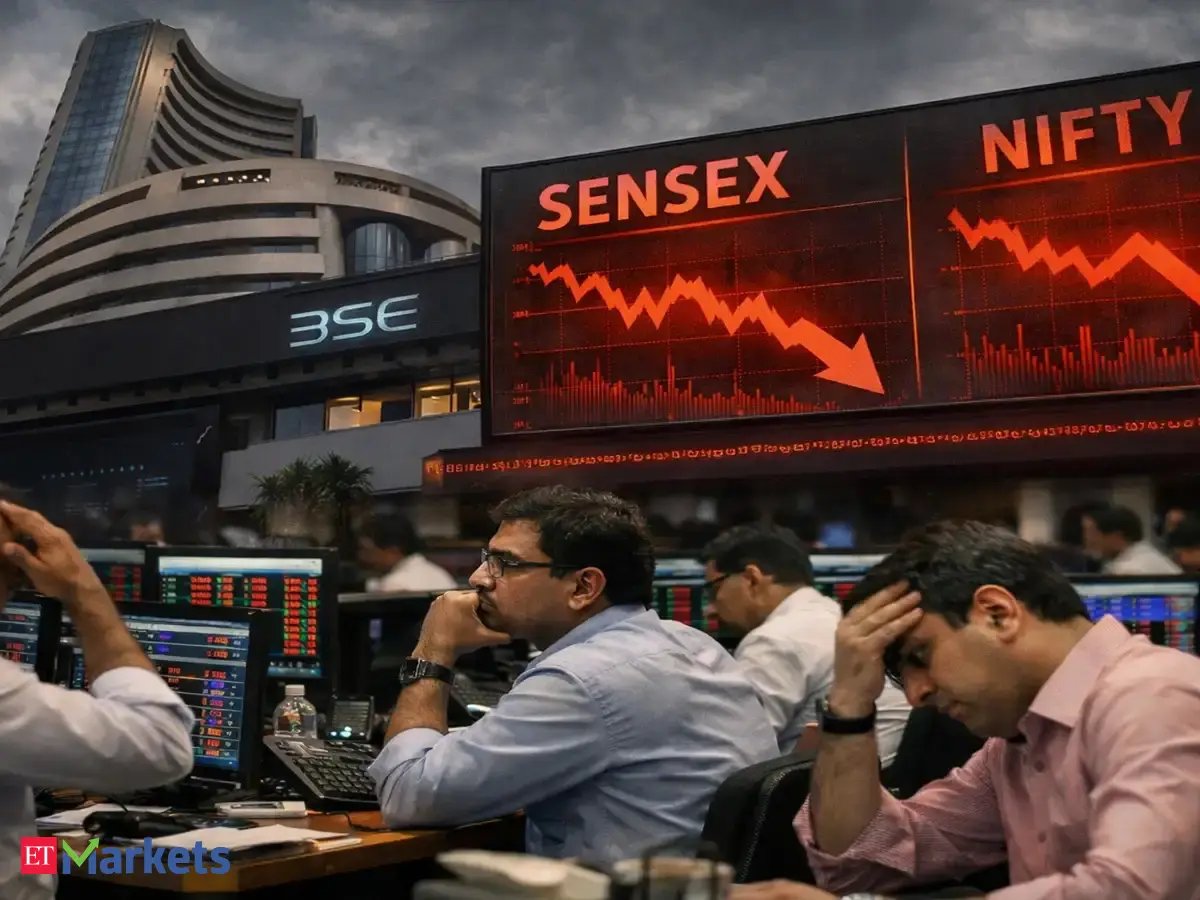


 3 sources
Morning Edition · Friday, October 9, 2026UpdatedPublished at 7:40 AM EDT · New York
Sensex drops 1,045 points as $104 oil and expected rate hikes hit Indian assets
Thursday's sell-off erased nearly ₹10 lakh crore in market value and pushed the India VIX volatility index up 10%, but Indian equities rebounded sharply on Friday as crude oil eased and the rupee firmed.
Updated at 7:40 AM EDT
Indian equities reversed most of Thursday's losses on Friday as Brent eased and bond yields fell, cutting against the morning story's implication that the sell-off was continuing.
Indian equities had a broad sell-off on Thursday. The Sensex fell 1,045.46 points and the Nifty fell 371.25 points, erasing nearly ₹10 lakh crore in market capitalization. The Sensex closed at 71,593.24, down 1.44%, and the Nifty closed at 22,231.80, down 1.64%. The India VIX volatility index rose 10%.
Market reports named three causes. Brent crude rose above $104, US bond yields stayed high, and investors expected the Reserve Bank of India (RBI) to tighten policy further. The rupee traded close to its all-time low of 96.96 per dollar, set in May, and dealers said RBI intervention probably kept it from falling further.
The move reversed on Friday. The Sensex rose 879.09 points, or 1.23%, to close at 72,472.33, and the Nifty rose 288.65 points, or 1.3%, to 22,520.45, recovering most of the ground lost a day earlier. Traders cited value buying after the Thursday drop, stronger-than-expected earnings from information-technology companies, a pullback in crude oil prices, and a firmer rupee as US Treasury yields eased from their recent highs. Brent crude fell to about $103 a barrel on President Donald Trump's statement that the United States would not strike Iran before the November 3 midterm elections, loosening one of the two pressures that had driven Thursday's decline. The expectation of further RBI tightening, the other pressure, has not gone away.
Food prices are adding to the pressure from fuel regardless of the day-to-day swing in equities. The Economist reports that rising sugar prices will make this year's Indian festival season more expensive. That leaves the RBI fighting both fuel and food inflation while it defends the currency.
One change on Thursday eased conditions for businesses regardless of the market swings. The Goods and Services Tax (GST) Council removed GST officers' power of arrest, raised the threshold for prosecution to ₹5 crore, cut penalties and promised faster refunds and simpler registration. For companies operating in India, that lowers the personal legal risk of tax disputes. It does nothing about the currency and rate risk that drove Thursday's sell-off and Friday's partial recovery.
Part of a tracked trend
Renewed Fed Tightening Fears Rattle Global Markets
Over the next 3-6 months stronger US data revives expectations of Fed rate hikes, driving a firmer dollar, equity selloffs in export-heavy markets, and pressure on hard assets as the IMF warns of recurring economic shocks.
What this means
India imports most of the crude it uses. Each rise in Brent widens its import bill, weakens the rupee, and pushes the RBI toward higher interest rates or the use of foreign currency reserves. Holders of rupee assets, oil-intensive sectors such as aviation and paints, and companies with unhedged dollar debt are exposed. Exporters of information technology services gain from a weaker rupee. The new element is that the market now expects the RBI to raise rates rather than wait. That is a policy choice to defend the currency at the cost of growth. The desk's read is that the rupee stays under pressure and Indian equities keep losing ground to other markets while Brent stays above $100 and US long-term yields remain near their recent highs. The condition is that Hormuz stays restricted. A reopening of the strait under Iran's seven-day plan would reverse the oil channel within weeks and prove this read wrong.
What to watch
- The RBI's next rate decision and statement. They will show whether the central bank will raise rates to defend the rupee or rely on spending foreign reserves.
- Daily foreign portfolio flows into Indian equities. Continued outflows would show that foreign funds are cutting their exposure to India, not just trading the oil move.
- Whether the rupee moves below its May low of 96.96 per dollar. A break below that level would show that intervention is no longer holding the line.
Observations to monitor, not financial advice.
Synthesized from: Economic Times · The Economist · Mint
Townsquare
Start a discussion in Townsquare.
More from this edition
- Brent holds above $100 after a 4.1% jump as Trump rules out striking Iran before the midterms
- Iran reviews the US counteroffer on its seven-day Hormuz plan as Trump rules out strikes before November 3
- Gold rises 1.1% as Treasury yields ease, while bitcoin falls for a fourth straight day
- US envoys bring new proposals to Miami talks after Russian strikes kill more than 70 Ukrainians in a week
- Bank of Thailand tightens checks on foreign-currency and gold inflows as Singapore prepares another tightening
- Pakistan reaffirms its Saudi defense pledge as Houthi strikes on Saudi airports enter a third day
- ECB minutes show September hike was driven by an energy shock now expected to last into 2027
Comments
1Oct 9, 5:18 AM · edited
At $104 Brent and a rupee near 97 per dollar, a barrel costs India about ₹10,100, so each rupee of depreciation adds roughly ₹104 per barrel to the import bill.