← The Global Intelligence Brief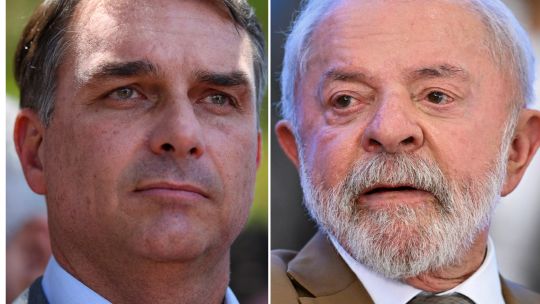


 4 sources
Morning Edition · Friday, October 23, 2026Published at 1:16 AM EDT · New York
Datafolha Puts Lula and Flávio Bolsonaro at 50% Each Before Sunday's Brazilian Run-Off
The real weakened to about 5.04 per dollar and the Ibovespa fell 1.15% on Thursday, as the government opened a third phase of its Desenrola debt-renegotiation program days before the vote.
A Datafolha poll released on Oct. 22 shows Senator Flávio Bolsonaro and President Luiz Inácio Lula da Silva tied at 50% of valid votes before Sunday's presidential run-off. Counting all responses, Bolsonaro has 47% and Lula 46%, within the two-point margin of error. The previous Datafolha poll, on Oct. 15, had Bolsonaro ahead 51% to 49%. The Buenos Aires Times reported that other major pollsters also show a technical tie.
Both campaigns are competing for regional endorsements. In Paraná, traditional local leaders and a former minister under ex-President Fernando Collor declared support for Lula, InfoMoney reported. Paraná's governor-elect Ratinho Junior and Sergio Moro have backed Bolsonaro. Lula spent Thursday preparing for Friday's TV Globo debate and used an online broadcast to urge older voters to vote, according to the state news agency Agência Brasil.
The government has also acted on household debt. An extraordinary edition of the official gazette published an order calling on financial institutions to take part in the third phase of Desenrola, the federal debt-renegotiation program. Lenders have five business days to tell the government which debts they will offer for renegotiation. The program reaches indebted voters directly, and Lula's government launched this phase days before the vote.
Investors grew more cautious. The Ibovespa fell 1.15% to 204,120.12 on Thursday, and the dollar rose 0.23% to 5.0394 reais. InfoMoney attributed the moves to global risk aversion, the election and losses in Vale and bank stocks.
Part of a tracked trend
Emerging-Market Elections Turn on Fiscal Credibility
In large emerging markets, polarised elections keep making fiscal rules and congressional arithmetic, rather than the identity of the winner, the main determinant of currency and local-rate pricing.
Veracity: Corroborated
88/100- If true, who benefits
If the race is tied, traders who sell hedges on the real and on Brazilian interest rates gain from the uncertainty, and the incumbent gains if the debt relief reaches indebted voters before Sunday.
- The nuance
CNN Brasil and Exame confirm the 50-50 result from 2,520 interviews conducted Oct. 20 to 22, yet 53% of respondents expect Flávio Bolsonaro to win against 39% for Lula, and the suggestion that the government timed the Desenrola phase for the vote is an inference that no cited source documents.
An open-source-intelligence read of how likely this story is true with its real nuance, not a judgment of any outlet. It assesses the claim, weighing independent and adversarial reporting. How we label confidence.
What this means
With the polls tied, the outcome of Sunday's vote is difficult to predict. What investors care about is the fiscal path after the vote. Brazil's local interest rates and the real reflect how credible the government's spending rules are and whether the winner can pass a budget through Congress. The candidate's name matters less. A Lula win with a new round of credit-support programs would raise doubts about the fiscal framework and push long-term local rates higher. A Bolsonaro win would raise a different question: whether a senator with no executive experience can assemble a working majority in Congress. The consensus treats a Bolsonaro victory as automatically positive for the real. The 2022 precedent contradicts that assumption. The real moved more on the choice of finance minister and the first spending proposals than on election night itself. The desk's read: in the two weeks after Sunday, the real and local interest rates react more to the winner's first fiscal signal than to the election result. A contested result, with the loser refusing to concede, would override this read and push risk premiums higher regardless of who wins.
Synthesized from: Buenos Aires Times · InfoMoney · Agência Brasil · Agência Brasil
Townsquare
Start a discussion in Townsquare.
More from this edition
- Meta's Higher AI Spending Plans Drive a 2.6% Nasdaq Drop and Push Money Into Japanese Bonds and the Yen
- French 10-Year Yield Climbs to Its Highest Level Since 2002 as Paris Bans Some Protests
- Brent Settles at $113.17 After Houthi Strikes Hit Saudi Oil Sites and an Airport
- Gold Falls Below $4,000 an Ounce as Oil and Strong U.S. Jobs Data Revive Rate Fears
- Netanyahu Says Iran's Government Must Be Overthrown as Tehran Prepares for Renewed Strikes
- Moscow Pushes for a Putin-Trump-Xi Summit as Trump Says a Ukraine Settlement Is "Closer Than Ever"
- Bank of Russia Expected to Hold Its Key Rate at 14% as Drones Keep Reaching Moscow
Comments
0No comments yet.