← The Global Intelligence Brief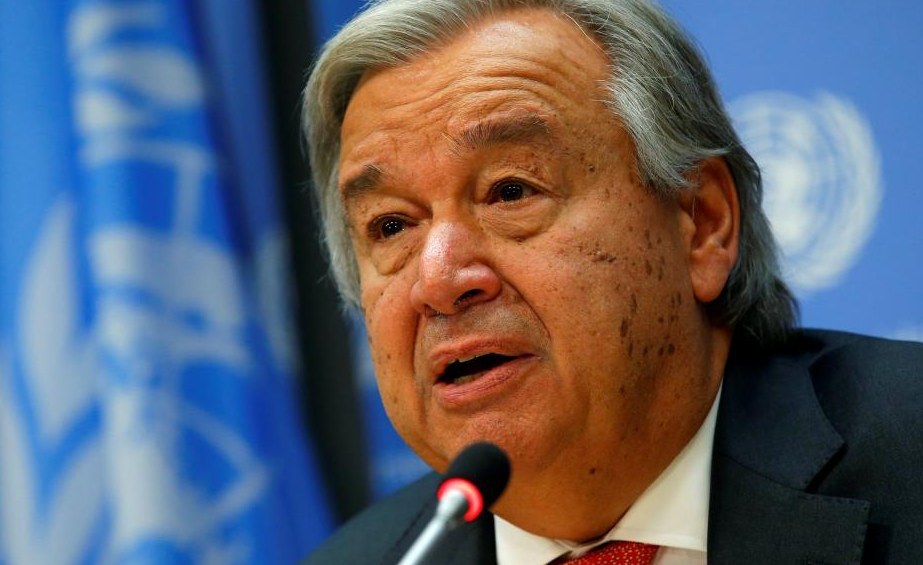


 4 sources
Morning Edition · Wednesday, September 23, 2026Published at 6:54 AM EDT · New York
Brazil, Germany, India and Japan Demand Security Council Reform as Guterres Calls Africa's Exclusion Indefensible
A senior Russian lawmaker responded that abolishing the veto would be a tragic error, marking the divide between the states that want the 1945 structure changed and the ones that hold its privileges.
The foreign ministers of Brazil, Japan, India and Germany, known collectively as the G4, issued a joint call for urgent Security Council reform on the sidelines of the General Assembly, the Russian daily Kommersant reported. Their argument is that the council cannot discharge its responsibility for international peace and security in its present composition, because regions including Africa and Latin America hold no permanent seat. The G4 ministers described comprehensive reform as an essential part of making the United Nations reflect current geopolitical realities.
Secretary-General Antonio Guterres made the same case from the institution's own leadership, saying Africa's continued absence from the permanent membership is no longer defensible. Al Jazeera reported that multiple heads of state and government used their General Assembly addresses to say the council is failing to function.
Moscow answered directly. Vladimir Dzhabarov, a senior member of the Russian upper house's international affairs committee, said removing the veto would be a tragic mistake, according to RIA Novosti. That position is shared in practice, if not always in public, by the other permanent members, since any amendment to the charter requires their assent.
The structural point is that reform requires the consent of exactly those states whose privileges reform would dilute. The consequence is not a redesigned council but a steady migration of coordination to other venues, from the expanded BRICS grouping to regional security arrangements and new middle-power coalitions.
Veracity: Corroborated
91/100- If true, who benefits
India, Brazil, Germany and Japan gain standing with the states excluded from permanent membership whether or not reform advances, and Russia gains a defence of the veto that costs it nothing because charter amendment already requires its consent.
- The nuance
The G4 ministerial statement and Antonio Guterres's position on Africa are on the record, but the G4 proposal is expansion of membership rather than abolition of the veto, so the Russian lawmaker's warning answers a demand the G4 did not make, and all five permanent members, not only Moscow, hold the blocking power.
An open-source-intelligence read of how likely this story is true with its real nuance, not a judgment of any outlet. It assesses the claim, weighing independent and adversarial reporting. How we label confidence.
What this means
When the principal forum for managing inter-state conflict cannot act, states hedge by building parallel arrangements, and that dispersal is what investors see as fragmented trade rules, competing technology standards and overlapping security guarantees. The near-term effect on prices is small. The medium-term effect runs through the cost of doing cross-border business, because firms must satisfy more than one regulatory and sanctions regime at once. Countries pressing hardest for reform, notably India and Brazil, gain diplomatic standing from the campaign whether or not the council changes.
Synthesized from: Kommersant · AllAfrica · Al Jazeera · RIA Novosti
Townsquare
Start a discussion in Townsquare.
More from this edition
- OECD Puts 2026 Global Growth at 2.9% and Credits AI Spending for Absorbing the Energy Shock
- US Secondary Sanctions on Iranian Airlines Take Effect, With Dollar Access as the Enforcement Tool
- Xi Jinping Flies to Washington for His First White House Visit in 11 Years
- Trump Threatens to "Annihilate" Iran at the United Nations as Brent Crude Falls Toward $98
- BitMEX Halts Trading After 11 Years as Bitcoin Holds Near $86,000
- Beijing Pushes Back as Chinese Carmakers Diversify Away From CATL Batteries
- Kremlin Rules Out an Unprepared Putin-Zelensky Meeting as Both War Budgets Expand
- European Commission Moves to Release €4.2 Billion to Hungary Under Its New Government
Comments
0No comments yet.