← The Global Intelligence Brief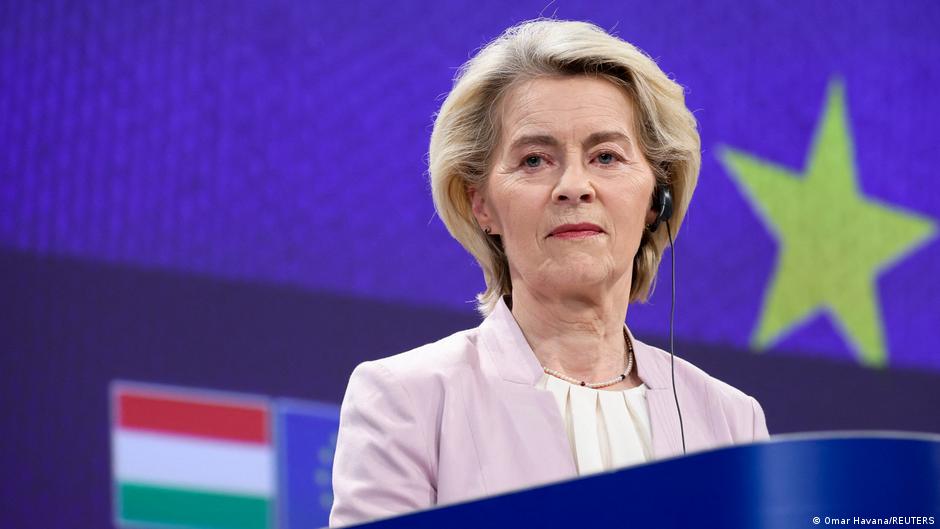


 3 sources
Morning Edition · Wednesday, September 23, 2026Published at 6:54 AM EDT · New York
European Commission Moves to Release €4.2 Billion to Hungary Under Its New Government
Ursula von der Leyen cited rule-of-law progress since Peter Magyar became prime minister in May, while about €2 billion stays frozen and member states must still approve the release.
The European Commission proposed on Wednesday to unblock 4.2 billion euros in cohesion funds for Hungary, citing steps the new government has taken on the rule of law and on protecting the European Union's financial interests. Deutsche Welle reported that the Commission president made the case with Viktor Orban out of office, after funds were frozen over corruption allegations under the previous government. Euronews reported that the sum forms part of 16.4 billion euros the Commission signalled in May it would release as Hungary implemented reforms, that Erasmus+ and Horizon Europe will reopen to Hungarian students and researchers, and that roughly 2 billion euros remain blocked over the asylum system, child protection law and academic freedom. The Council of member states must adopt the proposal.
The sequence establishes a precedent that applies well beyond Budapest. Cohesion transfers now move with the political makeup of a national government, which makes a share of a member state's fiscal position contingent on elections rather than on economic performance.
The politics that produced Hungary's change of government are visible across the continent. A survey in France found that close to nine in ten respondents feel pessimistic about the future facing their children, with climate change and the cost of living at the top of their concerns, according to IRNA's report on the polling. Al Jazeera published a commentary arguing that European centrist parties are paying the electoral price for adherence to austerity, a contested reading that nonetheless describes the same voter discontent the French polling records.
Veracity: Corroborated
93/100- If true, who benefits
Hungary's new government gains fiscal room and a delivered campaign promise, the European Commission gains proof that funding conditionality changes national behaviour, and holders of Hungarian sovereign debt gain an improved external financing position.
- The nuance
The proposal, the amount and the remaining freeze are confirmed by the Commission and multiple outlets, but the Council has not adopted it, and Brussels attributes the release to specific legal benchmarks being met rather than to the change of government, which is the article's own interpretation.
An open-source-intelligence read of how likely this story is true with its real nuance, not a judgment of any outlet. It assesses the claim, weighing independent and adversarial reporting. How we label confidence.
What this means
Roughly 4.2 billion euros entering the Hungarian budget improves the country's fiscal arithmetic and supports domestic investment, and it also converts European Union transfers into an explicit instrument of political conditionality. For holders of central and eastern European sovereign debt, the practical result is that a national election can now shift a country's transfer receipts by billions of euros in either direction, which means political risk has to be priced alongside deficits and growth. Across the wider union, the cost-of-living discontent recorded in French polling is the force reshaping which governments qualify for those transfers in the first place.
Synthesized from: Deutsche Welle · Al Jazeera · IRNA
Townsquare
Start a discussion in Townsquare.
More from this edition
- OECD Puts 2026 Global Growth at 2.9% and Credits AI Spending for Absorbing the Energy Shock
- US Secondary Sanctions on Iranian Airlines Take Effect, With Dollar Access as the Enforcement Tool
- Xi Jinping Flies to Washington for His First White House Visit in 11 Years
- Trump Threatens to "Annihilate" Iran at the United Nations as Brent Crude Falls Toward $98
- BitMEX Halts Trading After 11 Years as Bitcoin Holds Near $86,000
- Brazil, Germany, India and Japan Demand Security Council Reform as Guterres Calls Africa's Exclusion Indefensible
- Beijing Pushes Back as Chinese Carmakers Diversify Away From CATL Batteries
Comments
0No comments yet.