← The Global Intelligence Brief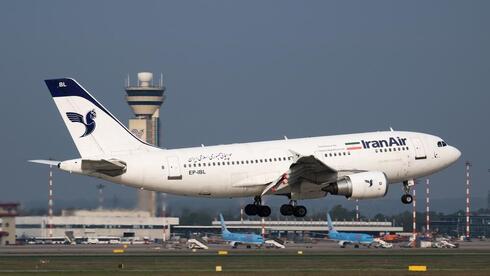
Morning Edition · Wednesday, September 23, 2026Published at 6:54 AM EDT · New York
US Secondary Sanctions on Iranian Airlines Take Effect, With Dollar Access as the Enforcement Tool
Turkey, Iraq, Oman and Azerbaijan have suspended flights to and from Iran, while Russia and China say their aviation links with Tehran remain lawful and will continue.
Washington's measures against Iranian civil aviation took effect on Wednesday. Treasury Secretary Scott Bessent had said this week that every Iranian airline would be shut down by the threat of secondary sanctions on the foreign companies that service them. The Israeli outlet Ynet reported that the State Department warned that any party supplying Iranian carriers with fuel or landing services would be removed from the dollar system, and that Russia and China had declined to comply, describing their ties with Tehran as legitimate and lawful.
The instrument is not a ban on Iranian airlines. It is a threat directed at airport operators, fuel suppliers, ground handlers and ticketing companies, each of which risks losing access to United States dollar transactions if it serves Iran Air, Mahan Air or Qeshm Air. Al Jazeera set out the same mechanism in its explainer on whether Washington can ground Iranian carriers worldwide, noting that the practical reach depends entirely on third-country service providers, not on Iranian aircraft.
Compliance so far has come from states Iran counts as partners. The Israeli business daily Globes reported that Turkey, Iraq, Oman and Azerbaijan have all halted flights to and from Iran, a step it described as a severe blow to the country and its citizens. The National reported that the measures, if enforced broadly, would leave Iran dependent on foreign carriers for international air links.
The episode shows how the dollar functions as infrastructure rather than simply as money. Access to dollar clearing is the pressure point, and the same leverage that makes the sanctions effective gives every state watching a reason to build settlement channels that do not route through New York.
Veracity: Corroborated
83/100- If true, who benefits
Washington gains proof that dollar clearing can be converted into operational control over a third country's aviation, and Israeli outlets gain a demonstration that pressure on Tehran is working, while Gulf, Turkish and Caucasus service firms absorb the lost Iranian revenue.
- The nuance
The suspensions by Iraq, Azerbaijan and Turkey are independently reported, but Oman's restriction is narrower than a blanket ban, Iran Air says it received no suspension order and that Istanbul, Baku and Najaf flights continue, and the assertion that Moscow and Beijing refused to comply rests on a single Israeli report rather than on Russian or Chinese statements.
An open-source-intelligence read of how likely this story is true with its real nuance, not a judgment of any outlet. It assesses the claim, weighing independent and adversarial reporting. How we label confidence.
What this means
Washington is converting control of dollar clearing into direct operational power over a third country's aviation sector, and the companies exposed are fuel suppliers, ground handlers and airport operators in Turkey, Iraq, Oman and Azerbaijan that must choose between Iranian revenue and access to the American financial system. Nearly all of them have chosen the dollar, which demonstrates that the tool works. The second-order effect works in the opposite direction: each demonstration raises the incentive, for Moscow, Beijing and Gulf states alike, to build payment and service arrangements outside dollar reach. Iranian air links contract now, and the incentive to build parallel payment systems outside dollar clearing grows over years.
Townsquare
Start a discussion in Townsquare.
More from this edition
- OECD Puts 2026 Global Growth at 2.9% and Credits AI Spending for Absorbing the Energy Shock
- Xi Jinping Flies to Washington for His First White House Visit in 11 Years
- Trump Threatens to "Annihilate" Iran at the United Nations as Brent Crude Falls Toward $98
- BitMEX Halts Trading After 11 Years as Bitcoin Holds Near $86,000
- Brazil, Germany, India and Japan Demand Security Council Reform as Guterres Calls Africa's Exclusion Indefensible
- Beijing Pushes Back as Chinese Carmakers Diversify Away From CATL Batteries
- Kremlin Rules Out an Unprepared Putin-Zelensky Meeting as Both War Budgets Expand
Comments
1Sep 23, 10:54 AM · edited
Compliance by third country providers to preserve dollar access confirms that secondary sanctions are a credible coercive instrument, potentially accelerating government support for payment alternatives in those jurisdictions.