← The Global Intelligence Brief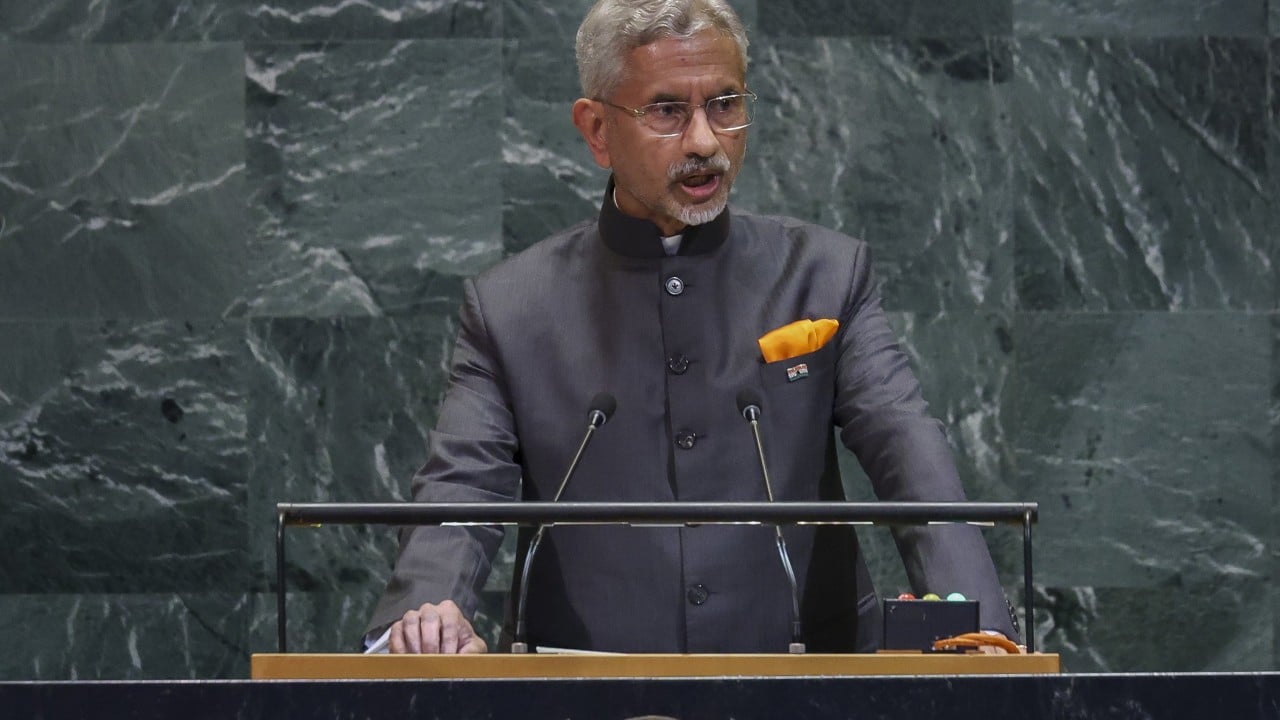


 3 sources
Morning Edition · Wednesday, September 23, 2026Published at 6:54 AM EDT · New York
India Joins a New Middle-Power Bloc as Britain and Indonesia Expand Defence Capability
The Partners for Multilateralism grouping, founded by the European Union with Brazil, Kenya and Canada, held its first session as Britain announced a military space squadron and Indonesia sent Rafale pilots to France.
India's external affairs minister, Subrahmanyam Jaishankar, co-chaired the inaugural session of Partners for Multilateralism (P4M) in New York, a grouping founded by the European Union with Brazil, Kenya and Canada and joined by Australia, Barbados and India. The South China Morning Post described it as entering a crowded field of overlapping coalitions, and analysts quoted in the report read New Delhi's participation as an effort to widen its diplomatic options while it presses for changes to the global order.
Defence procurement is moving on the same logic. Britain said it will create a Royal Air Force squadron to protect its satellites, Dawn reported, joining a set of countries building military space capability. Indonesia's air force is sending a cohort of Rafale pilots to France for advanced tactical training, Antara reported, deepening a supplier relationship with Paris rather than with Washington.
Taken together, the three moves describe a pattern rather than three unrelated decisions. States that once organised their diplomacy and their arms purchases around American leadership are now assembling their own coalitions and diversifying their suppliers. Each individual step is modest. The cumulative effect is a defence market with more buyers shopping across more vendors, and a diplomatic map with more venues where a crisis can be negotiated, or left unresolved.
Part of a tracked trend
Middle Powers Build Security Blocs Outside Washington
States that once relied on American guarantees keep forming their own mutual defense arrangements, redirecting arms procurement away from Western suppliers and creating overlapping commitments that make regional crises harder to contain.
Veracity: Corroborated
80/100- If true, who benefits
European defence exporters and France in particular gain from procurement diversification, India and other middle powers gain additional forums that raise their price for cooperation, and the European Union gains partners for a rules-based agenda it can no longer advance through Washington alone.
- The nuance
Partners for Multilateralism (P4M) was launched on 21 September with the European Union, Australia, Barbados, Brazil, Canada, India and Kenya as co-sponsors, which is a looser structure than the founder-and-joiner account given, and the link drawn between that declaration, a British satellite-protection squadron and Indonesian pilot training in France is the article's synthesis rather than a stated common purpose.
An open-source-intelligence read of how likely this story is true with its real nuance, not a judgment of any outlet. It assesses the claim, weighing independent and adversarial reporting. How we label confidence.
What this means
European defence contractors, notably France's Dassault Aviation and the satellite and space-services firms supplying Britain's new squadron, gain order flow as states diversify away from single-supplier dependence on the United States. For American defence exporters the effect is the reverse, and it compounds slowly because pilot training and maintenance contracts lock buyers in for decades. On the diplomatic side, more overlapping groupings means more forums with partial membership, which makes coordinated responses to a crisis harder to assemble even as each grouping claims to strengthen multilateralism.
Synthesized from: South China Morning Post · Dawn · Antara
Townsquare
Start a discussion in Townsquare.
More from this edition
- OECD Puts 2026 Global Growth at 2.9% and Credits AI Spending for Absorbing the Energy Shock
- US Secondary Sanctions on Iranian Airlines Take Effect, With Dollar Access as the Enforcement Tool
- Xi Jinping Flies to Washington for His First White House Visit in 11 Years
- Trump Threatens to "Annihilate" Iran at the United Nations as Brent Crude Falls Toward $98
- BitMEX Halts Trading After 11 Years as Bitcoin Holds Near $86,000
- Brazil, Germany, India and Japan Demand Security Council Reform as Guterres Calls Africa's Exclusion Indefensible
- Beijing Pushes Back as Chinese Carmakers Diversify Away From CATL Batteries
Comments
0No comments yet.