← The Global Intelligence Brief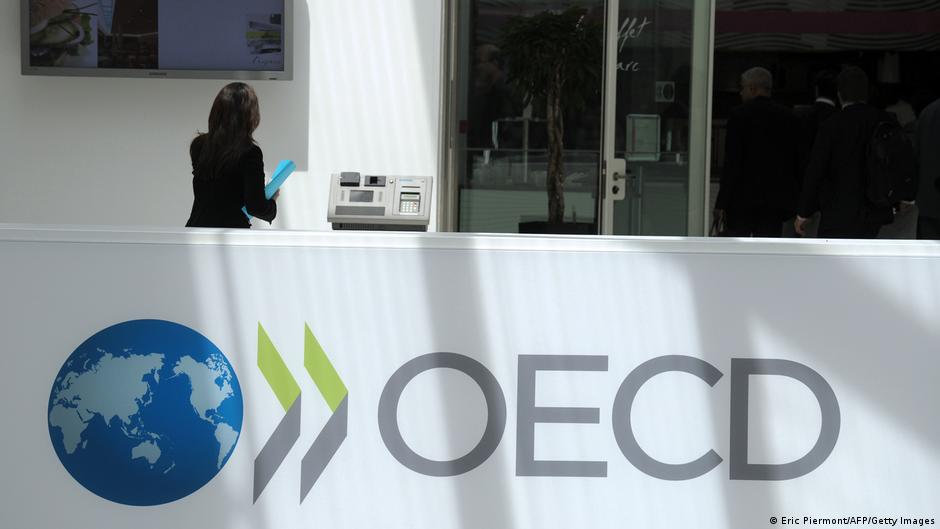

 3 sources
Morning Edition · Wednesday, September 23, 2026Published at 6:54 AM EDT · New York
OECD Puts 2026 Global Growth at 2.9% and Credits AI Spending for Absorbing the Energy Shock
The forecast arrives a week after the Federal Reserve raised its policy rate, and the OECD names higher sovereign bond yields and weak returns on artificial-intelligence investment as the main risks to its own numbers.
The Organisation for Economic Co-operation and Development (OECD) published its interim outlook on Wednesday and projected global output growth of 2.9 percent in 2026 and 3.0 percent in 2027. Deutsche Welle reported the headline number alongside the organisation's judgement that growth has stayed resilient despite the war in the Middle East, with energy costs feeding inflation at the same time.
The mechanics behind the resilience deserve attention. The OECD attributes it to discretionary government support measures, substitution toward alternative commodity inputs, additional supply from producers outside the Gulf, drawdowns of strategic oil reserves and sustained investment in artificial-intelligence capacity. Four of those five are one-time buffers rather than durable sources of output. Fiscal transfers and reserve releases move the cost of the energy shock onto public balance sheets and future supply, and the OECD's 2027 stabilisation rests on an assumption that energy prices decline as supply recovers.
Monetary policy is moving in the opposite direction. The Federal Reserve raised its target range to 3.75 to 4 percent on 16 September in a unanimous vote, its first increase since 2023, with the inflation gauge the Fed watches most closely (the core PCE price index) running near 3.4 percent. The yield on the ten-year Treasury note sat near 4.95 percent on Tuesday after passing 5 percent last week for the first time since 2023.
Parts of the developing world report the same split picture. Indonesia's government says its labour-intensive manufacturing sub-sectors rebounded in the second quarter, while the finance ministry has set out three strategies to shore up the state budget, a combination that shows output supported partly by the state at a moment when borrowing costs are rising globally.
Part of a tracked trend
Renewed Fed Tightening Fears Rattle Global Markets
Over the next 3-6 months stronger US data revives expectations of Fed rate hikes, driving a firmer dollar, equity selloffs in export-heavy markets, and pressure on hard assets as the IMF warns of recurring economic shocks.
What this means
The OECD is describing growth bought with fiscal support, reserve drawdowns and a single concentrated investment boom, while the Fed tightens into inflation near 3.4 percent and long-term borrowing costs sit close to 5 percent. Governments running wide deficits face higher refinancing costs on every maturing bond, and equity indexes that depend on artificial-intelligence capital spending carry the risk the OECD itself flags, which is that returns on that spending disappoint. Two outcomes are possible: energy supply recovers in 2027 and inflation falls back toward target, or the war premium persists and central banks keep tightening into an economy already dependent on state support. Which one arrives depends on Gulf export volumes and on whether wage and services inflation follows energy lower.
What to watch
- Whether the Federal Reserve delivers the additional increase its own projections point to this year, which would confirm that policymakers see inflation as entrenched rather than energy-driven.
- The ten-year Treasury yield around the 5 percent area, because sustained trading above it signals investors are demanding more compensation to hold long-dated government debt regardless of the policy rate.
- Capital spending guidance from the largest artificial-intelligence buyers, since the OECD's growth arithmetic depends on that investment continuing.
Observations to monitor, not financial advice.
Synthesized from: Deutsche Welle · Antara · Antara
Townsquare
Start a discussion in Townsquare.
More from this edition
- US Secondary Sanctions on Iranian Airlines Take Effect, With Dollar Access as the Enforcement Tool
- Xi Jinping Flies to Washington for His First White House Visit in 11 Years
- Trump Threatens to "Annihilate" Iran at the United Nations as Brent Crude Falls Toward $98
- BitMEX Halts Trading After 11 Years as Bitcoin Holds Near $86,000
- Brazil, Germany, India and Japan Demand Security Council Reform as Guterres Calls Africa's Exclusion Indefensible
- Beijing Pushes Back as Chinese Carmakers Diversify Away From CATL Batteries
- Kremlin Rules Out an Unprepared Putin-Zelensky Meeting as Both War Budgets Expand
Comments
1Sep 23, 10:54 AM · edited
Depleting strategic reserves to cushion the current shock reduces the buffer available for any subsequent energy disruption before those stocks can be rebuilt.