← The Global Intelligence Brief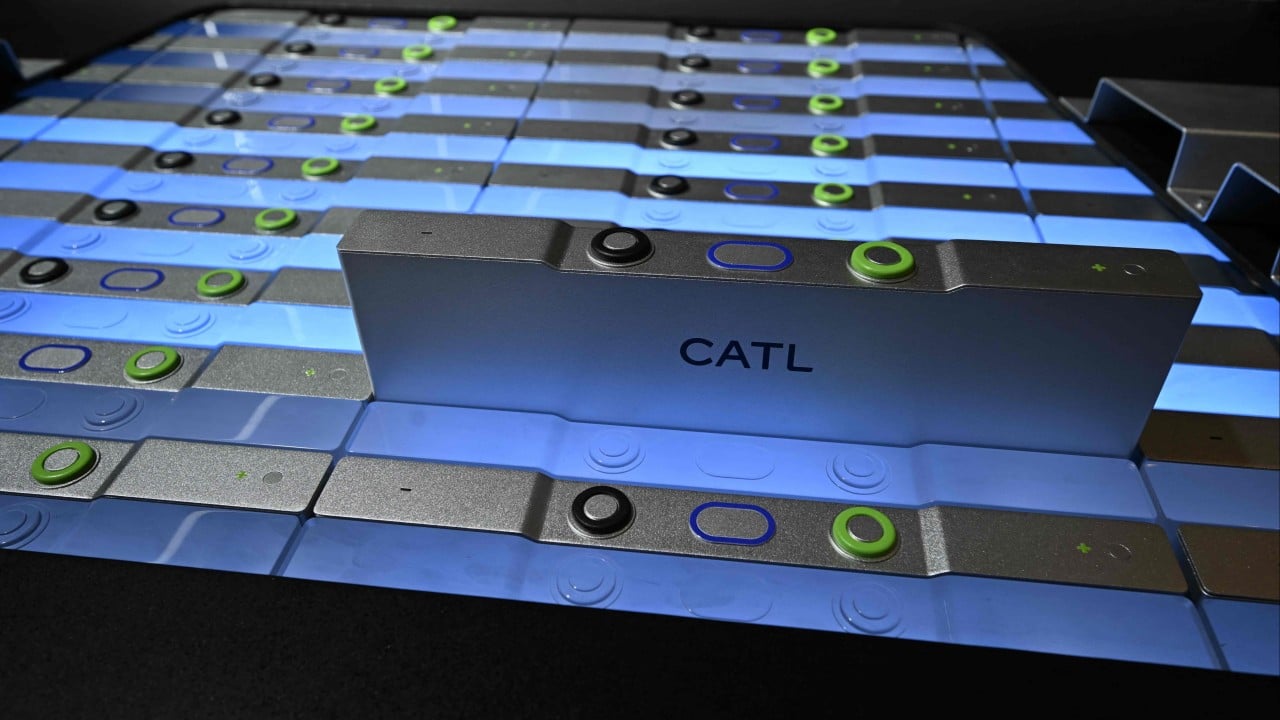

 3 sources
Morning Edition · Wednesday, September 23, 2026Published at 6:54 AM EDT · New York
Beijing Pushes Back as Chinese Carmakers Diversify Away From CATL Batteries
A publication under the industry ministry called market talk of "de-CATLisation" an overreaction after the battery maker's shares fell, while Hong Kong pulled forward the start of a supercomputing hub to mid-2027.
A news outlet run under China's Ministry of Industry and Information Technology published a commentary rejecting the idea that Chinese carmakers are abandoning Contemporary Amperex Technology Company Limited (CATL), the country's dominant battery supplier. The South China Morning Post reported that the commentary called market discussion of "de-CATLisation" an overreaction, after CATL's shares declined as a growing number of its automotive partners added second and third battery suppliers.
Both things are true at once. Chinese carmakers are diversifying to reduce dependence on a single supplier and to improve their bargaining position on cell prices, and CATL retains a scale advantage that no domestic rival matches. The state's intervention in the debate is the notable part, because it shows Beijing treating the valuation of a national champion as a matter of industrial policy rather than of market opinion.
The broader buildout continues on schedule or ahead of it. CLP Power said the supercomputing and data hub planned for Hong Kong's Northern Metropolis development near the mainland border will begin phased operations in mid-2027, earlier than expected, and said it has sufficient generating capacity to supply it. In Shanghai, the WorldSkills competition opened with humanoid robots performing alongside dancers, with 1,385 competitors from 68 countries entered in 64 events.
Batteries, computing capacity and industrial automation are the three inputs China has prioritised since American export controls tightened. Progress in all three reduces the leverage those controls carry into this week's summit in Washington.
Part of a tracked trend
China Builds a Parallel Technology Stack
United States export controls push China to develop its own chips, computing hardware and artificial-intelligence systems, accelerating a split of global technology into competing spheres that reshapes supply chains and standards.
Veracity: Corroborated
88/100- If true, who benefits
Contemporary Amperex Technology Company Limited (CATL) gains official support for its share price, Chinese carmakers gain cheaper cells from a weakened supplier's pricing power, and Beijing gains a way to frame ordinary procurement decisions as a matter of industrial policy.
- The nuance
Both halves check out, since Li Auto, Xiaomi and others have added rival suppliers and CATL shares fell sharply while state media rejected the "de-CATLisation" framing, but CATL still held about 41 percent of Chinese battery installations in August, and the diversification is driven by carmaker margin pressure rather than by any state campaign.
An open-source-intelligence read of how likely this story is true with its real nuance, not a judgment of any outlet. It assesses the claim, weighing independent and adversarial reporting. How we label confidence.
What this means
Supplier diversification inside China compresses margins for CATL while lowering input costs for carmakers, which is an ordinary competitive outcome that Beijing is treating as a policy problem. For foreign investors the signal matters more than the shares: a ministry-linked outlet intervening in price formation indicates that state judgement, not earnings, can set the terms of debate on strategic companies. Meanwhile the Hong Kong computing hub and the automation push reduce China's exposure to American export controls over time, which weakens the leverage Washington brings to trade negotiations.
Synthesized from: South China Morning Post · South China Morning Post · Euronews
Townsquare
Start a discussion in Townsquare.
More from this edition
- OECD Puts 2026 Global Growth at 2.9% and Credits AI Spending for Absorbing the Energy Shock
- US Secondary Sanctions on Iranian Airlines Take Effect, With Dollar Access as the Enforcement Tool
- Xi Jinping Flies to Washington for His First White House Visit in 11 Years
- Trump Threatens to "Annihilate" Iran at the United Nations as Brent Crude Falls Toward $98
- BitMEX Halts Trading After 11 Years as Bitcoin Holds Near $86,000
- Brazil, Germany, India and Japan Demand Security Council Reform as Guterres Calls Africa's Exclusion Indefensible
- Kremlin Rules Out an Unprepared Putin-Zelensky Meeting as Both War Budgets Expand
Comments
0No comments yet.