← The Global Intelligence Brief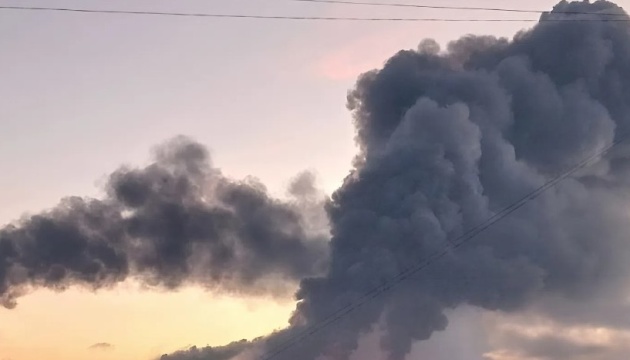


 4 sources
Morning Edition · Friday, November 6, 2026Published at 4:38 AM EST · New York
Ukrainian drones hit the Afipsky refinery again as Russian strikes damage power facilities around Kyiv
Krasnodar's airport restricted flights during the attack, Vladikavkaz's airport suspended traffic, and the European Council president agreed to Italy's request to discuss what Prime Minister Giorgia Meloni calls disarray in peace efforts.
Drones attacked the Afipsky oil refinery in Russia's Krasnodar region on the night of November 6, and a fire broke out, Ukrinform reported, citing media accounts. The regional emergency headquarters reported a fire in the settlement of Afipsky caused by falling debris but did not name the plant. It reported no injuries and said drone fragments broke windows in an apartment building. Russian authorities have not confirmed a hit on the refinery, and no independent account gives the extent of the damage. Krasnodar airport restricted flights during the attack. By late August, independent outlet The Insider had counted at least 15 earlier attacks on the plant.
Disruption reached the North Caucasus as well. TASS reported (in Russian) that Vladikavkaz airport suspended arrivals and departures. The state agency gave no cause in its headline. In earlier cases, Russia's aviation agency has described similar closures as measures to ensure flight safety.
Russia struck Ukraine's power grid the same night. Ukrinform reports that an overnight attack damaged energy infrastructure in three districts of the Kyiv region and injured three people. A separate tally put five injured in the region over 24 hours, with a dormitory at an educational institution damaged. Neither side's account of the other's losses can be independently verified.
European diplomacy is moving more slowly than the strikes. The Kyiv Independent reports that European Council President António Costa endorsed Meloni's criticism of "disarray" in peace talks. He wrote that he would make time to discuss the issue at the coming informal European Council meeting in Dublin. Meloni has for months pressed for a single EU envoy to Russia, because EU leaders have no joint position.
Part of a tracked trend
Ukraine's Deep Strikes on Russian Energy and Logistics
Ukraine sustains a campaign against Russian refineries and supply lines over the next 3-6 months, pressuring Moscow's oil revenue while Russia retaliates against Ukraine's grid.
Veracity: Corroborated
85/100- If true, who benefits
Ukraine gains by cutting Russian refinery output and Black Sea fuel exports, Russia gains by raising Ukraine's winter energy import bill, and fuel traders outside both countries gain from tighter regional product supply.
- The nuance
Krasnodar officials cited only a fire at an unnamed enterprise caused by falling debris, Ukrainian monitoring channels supplied the refinery identification and reports of a damaged processing unit, and the same Euronews report says one person was killed in Russian strikes on Ukraine that night, a death the edition does not mention.
An open-source-intelligence read of how likely this story is true with its real nuance, not a judgment of any outlet. It assesses the claim, weighing independent and adversarial reporting. How we label confidence.
What this means
Each side is targeting the other's energy system. Ukraine's strikes on refineries in Krasnodar reduce Russian fuel exports from the Black Sea ports and raise domestic fuel costs in southern Russia. Russia's strikes on the grid around Kyiv raise Ukraine's winter import needs and the cost of keeping its industry running. The airport closures in Krasnodar and Vladikavkaz raise insurance and logistics costs inside Russia, far from the front. Europe's offer of an envoy matters only if it gives Brussels a seat that Washington and Moscow accept. So far neither has asked for one. The repeated attacks on one plant show that Ukraine can hit Afipsky but cannot keep it offline, so the measurable effect is repair time and lost throughput rather than permanent capacity loss. The likelier outcome is more strikes on both energy systems through the winter, with fuel margins in southern Russia and Ukrainian electricity imports both rising within weeks. Europe's role in any settlement would keep shrinking unless the Dublin meeting names a single negotiator that both Washington and Moscow agree to meet. A reported US-Russia agreement on energy-strike limits would change that read.
Synthesized from: Ukrinform · TASS (Russian) · Kyiv Independent · Meduza
Townsquare
Start a discussion in Townsquare.
More from this edition
- Asian chip stocks follow the Nasdaq down as investors bet Democratic gains will slow data-center building
- Bank of England raises Bank Rate to 4%, its first increase since 2023, and warns more rises are likely
- Ueno Bank's collapse freezes the savings of about 3 million Paraguayans and forces out the central bank chief
- Brent climbs back toward $100 after new Hormuz tanker attacks but heads for a weekly loss of about 12%
- Washington weighs resuming strikes on Iran on November 9, Fox News reports, as Riyadh denies a $51 billion Houthi demand
- Goldman Sachs cuts its year-end gold forecast to $4,150 as Fed officials argue for more rate increases
- Bitcoin falls to about $75,600 as more than $1 billion in leveraged positions are liquidated
Comments
0No comments yet.